
Electric Van vs Electric Truck: Which Is Better for Your Business?
Compare electric vans and electric trucks based on cargo space, payload, range, charging and operating needs to find the right commercial EV for your business.
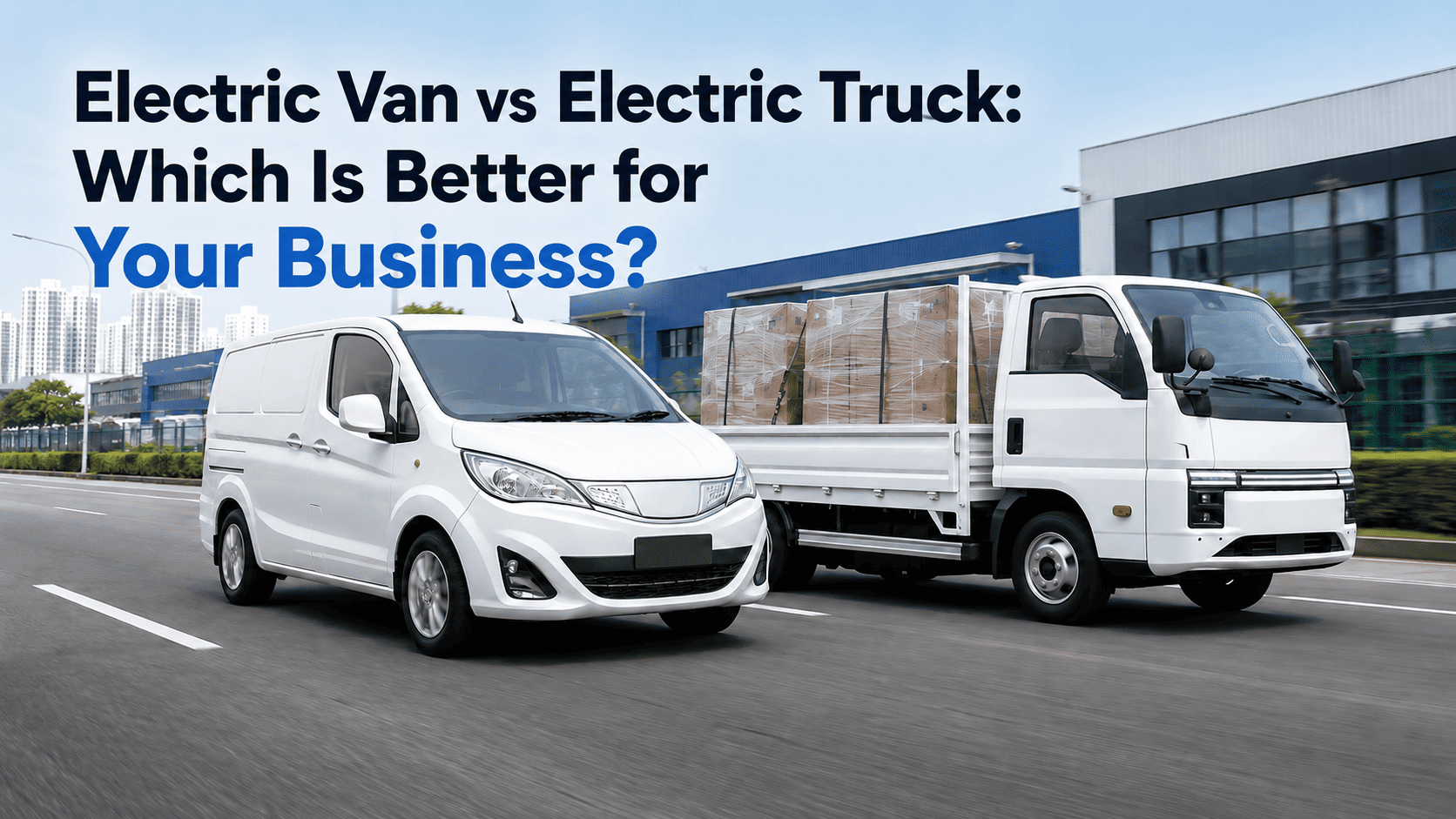
An electric van and an electric truck may both transport goods, but they are designed for different operating requirements.
Electric vans generally provide enclosed cargo space, easier access and greater manoeuvrability for urban deliveries. Electric trucks usually offer higher payloads and more flexibility for carrying heavy, bulky or specialised cargo.
Choosing between them should not be based on vehicle size alone. Your decision should consider what the vehicle carries, where it operates, how often it travels and how it will be charged.
This guide compares electric vans and electric trucks to help Singapore businesses identify the more suitable option for their operations.
What Is an Electric Van?
Electric vans and electric trucks can both be used to transport goods, but they are designed for different operational requirements.
It is commonly used for:
- Parcel and courier delivery
- E-commerce fulfilment
- Food and catering distribution
- Retail stock movement
- Service and maintenance work
- Tools and equipment transportation
- Last-mile delivery
Electric vans are available in different sizes. Some models prioritise compact dimensions for urban use, while larger cargo vans provide more internal storage for higher-volume operations.
For example, the BYD T3 Electric offers an estimated cargo capacity of 3.8m³, while the Farizon V7E provides approximately 6.95m³ of cargo space.
The right size depends on the volume and weight of the goods being transported.
What Is an Electric Truck?
An electric truck uses a battery-powered drivetrain but provides a truck-style body designed for larger or heavier commercial loads.
Depending on the configuration, electric trucks may be used for:
- Industrial deliveries
- Construction equipment
- Wholesale distribution
- Furniture transportation
- Machinery and heavy tools
- Large-volume goods
- Specialised commercial bodies
Compared with a van, a truck may provide a higher payload and more flexibility in body configuration. It may be fitted with a box body, open deck or other application-specific structure, subject to applicable requirements.
Models available through Accord Solutions include electric trucks with estimated payloads ranging from approximately 1.1 tonnes to 2.7 tonnes.
Electric Van vs Electric Truck: Key Differences
| Consideration | Electric Van | Electric Truck |
|---|---|---|
| Main purpose | Enclosed cargo and urban delivery | Heavy, bulky or specialised cargo |
| Cargo measurement | Usually cargo volume and payload | Usually payload and body dimensions |
| Loading access | Side and rear doors | Depends on truck body |
| Manoeuvrability | Generally easier in urban locations | Requires more operating space |
| Cargo protection | Enclosed as standard | Depends on selected body |
| Payload | Usually suited to light or medium loads | Generally suited to heavier loads |
| Common use | Courier, retail and service operations | Logistics, industrial and equipment transport |
| Parking | Generally easier | May require larger parking areas |
| Charging needs | Depends on battery and daily distance | May require more energy under heavy loads |
These are general differences. Actual specifications vary between models and configurations.
Which Vehicle Is Better for Heavy Loads?
An electric truck will usually be more appropriate when payload is the main requirement.
For example, businesses transporting equipment or industrial materials may require a vehicle with a higher payload capacity.
Accord Solutions' electric truck range includes:
| Model | Estimated payload |
|---|---|
| Forland ET5 | 1,100kg |
| SRM T3 EV | 1,595–1,845kg |
| BYD T35 Electric Truck | 1,900kg |
| SANY FR381 | 2,000kg |
| Sany FR-601 14FT | 2,500kg |
| Chen Long L2EV | 2,510kg |
| Forland S1 Y Plate | 2,700kg |
Payload figures are estimates and should be verified based on the final vehicle and body configuration.
A heavier payload can also affect energy consumption and practical driving range. Businesses should assess the vehicle under expected operating loads rather than comparing unloaded specifications alone.
When Should You Choose an Electric Van?
An electric van may be more suitable if your business:
- Transports parcels or lightweight goods
- Requires an enclosed cargo compartment
- Makes frequent urban deliveries
- Operates in areas with limited parking
- Needs side and rear loading access
- Carries tools for mobile services
- Prioritises manoeuvrability
- Does not require a heavy payload
Businesses can consider models such as:
These vehicles provide different combinations of cargo capacity, battery size and estimated range.
When Should You Choose an Electric Truck?
An electric truck may be more suitable if your business:
- Regularly carries heavy loads
- Transports large or unusual cargo
- Requires forklift loading
- Needs a specialised truck body
- Operates mainly from warehouses or industrial locations
- Prioritises payload over compact dimensions
- Wants to reduce the number of trips required
Possible models include:
- BYD T35 Electric Truck
- Forland ET5
- Forland S1 Y Plate
- SANY FR381
- Sany FR-601 14FT
- SRM T3 EV
- Chen Long L2EV
The final selection should be based on the confirmed payload, body configuration, charging requirements and permitted vehicle use.
Frequently Asked Questions
Is an electric truck always larger than an electric van?
Electric trucks are generally designed for higher payloads or specialised bodies, but dimensions vary by model. Businesses should compare the exact height, width, length and turning requirements.
Does an electric truck have a longer range than an electric van?
Not necessarily. Driving range depends on battery capacity, vehicle design, load, route and operating conditions. A larger vehicle or battery does not automatically guarantee a longer practical range.
Is an electric van suitable for heavy goods?
Only if the total load remains within the vehicle's permitted payload. Cargo space alone does not determine how much weight the vehicle can safely carry.
Can electric vans and trucks use the same charger?
They may be able to use compatible chargers, but charging speed depends on the vehicle's connector and supported charging rate. Compatibility should be confirmed before installation.
Should a business buy or lease a commercial EV?
Purchasing may suit businesses planning long-term ownership. Leasing may suit companies that prefer lower upfront costs and greater fleet flexibility. The terms and total cost should be compared before deciding.
Find the Right Commercial EV for Your Operations
The choice between an electric van and an electric truck depends on the work the vehicle must perform.
Choose based on:
- Cargo volume
- Payload
- Loading method
- Daily distance
- Charging availability
- Operating environment
- Total business cost
An electric van may be more practical for frequent urban deliveries and enclosed cargo. An electric truck may be more suitable when payload, body configuration and load size are the main priorities.
Accord Solutions offers electric vans and trucks for different commercial applications in Singapore. Our team can help businesses compare vehicle specifications, assess operational requirements and identify a practical EV solution.